Selling a car as-is vs repairing it: which is better?
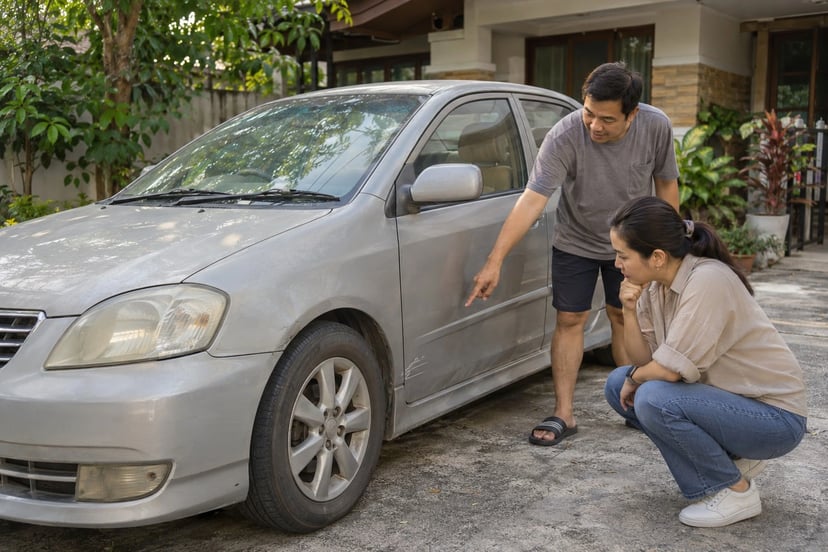
Selling a car as-is may be more cost-effective than repairing it before selling if the repair costs exceed the expected increase in resale value. Car owners should compare their net proceeds after deducting repair costs against the car's current as-is selling price, while considering safety, vehicle condition, market value and the time required for repairs.
Before selling a used car, many car owners wonder whether they should repair dents, replace tyres or resolve mechanical problems first. Although a well-maintained car that is ready to drive may give buyers greater confidence, the money spent on repairs may not always be fully recovered through a higher selling price.
Choosing between selling a car as-is and repairing it before selling therefore requires careful consideration of how much value each repair can actually add. This article explains the different types of repairs and how to calculate which option makes more financial sense for car owners.
Key Takeaways
- Repairing a car before selling does not always increase its resale value by the amount spent on repairs. Compare the net proceeds instead.
- Safety-related repairs should be prioritised before driving the vehicle or allowing potential buyers to test-drive it.
- Cleaning the car and addressing minor imperfections may improve its appearance without requiring a significant investment.
- For major repairs, obtain a repair quotation and an as-is purchase offer before making a decision.
- Always disclose accident history and significant damage, even if the vehicle has already been repaired.
Table of Contents
- Selling a Car As-Is or Repairing It: Why Should You Think Carefully?
- Which Car Repairs Should You Make Before Selling?
- How to Calculate Whether Repairing Your Car Before Selling Is Worth It
- What to Check Before Repairing Your Car for Sale
- Tips for Selling a Car As-Is at a Fair Price
- Selling a Car As-Is or Repairing It: It Depends on Cost and Condition
- Frequently Asked Questions (FAQs)
Selling a Car As-Is or Repairing It: Why Should You Think Carefully?
The price a used car buyer is willing to pay is not determined by how much the owner has previously spent maintaining the vehicle. Instead, it depends on the car's market value, current condition and the risks or repair expenses the buyer may need to manage after purchasing it. Therefore, spending THB 20,000 on repairs does not guarantee that the car will sell for an additional THB 20,000.
On the other hand, having minor imperfections does not necessarily make an old car difficult to sell. If the buyer understands the vehicle's condition and both parties agree on a price, selling the car as-is may save both time and money, particularly when the buyer has access to their own workshop or repair services.
Which Car Repairs Should You Make Before Selling?
Before selling a used car, it is important to categorise repairs according to their necessity. Minor scratches should not be treated in the same way as brake or engine problems, as their impact on safety and resale value differs significantly. The following are the main types of repairs car owners should consider before selling their vehicles.
1. Brakes, Tyres and Safety-Related Components
If the brakes are not functioning properly, the tyres are severely damaged or the steering system has problems, have a qualified mechanic inspect and repair the vehicle before driving it or allowing a potential buyer to test-drive it.
If you decide to sell the car as-is, clearly disclose these defects and do not allow potential buyers to test-drive an unsafe vehicle before the necessary repairs have been completed.
2. Scratches, Dents and Paintwork
Minor scratches may not justify repainting entire body panels, as the repair costs could exceed the additional selling price you receive. If the car has collision damage affecting multiple panels or structural components, obtain a repair quotation before deciding what to do.
You should also disclose the vehicle's damage history, even if the repairs have already been completed.
3. Interior and Minor Accessories
Washing the car, vacuuming the interior, removing unpleasant odours by addressing their underlying causes or fixing inexpensive accessories may help used car buyers assess the vehicle's condition more easily.
However, owners should not use cosmetic improvements to conceal damage or misrepresent the actual condition of the vehicle.
4. Engine, Transmission and Costly Electrical Repairs
Problems such as engine overheating, jerky gear changes or complex electrical faults should first be professionally diagnosed to determine their causes and estimated repair costs.
Undertaking major repairs solely to increase a used car's resale value may not be worthwhile, especially for older vehicles or cars with problems affecting multiple systems.
| Type of Repair | Recommended Approach Before Selling |
|---|---|
| Brakes, tyres and steering | Inspect and repair before driving the vehicle. |
| Minor scratches and dents | Compare repair costs with the potential increase in resale value. |
| Interior and exterior cleanliness | Consider cleaning the vehicle within a reasonable budget. |
| Engine, transmission and electrical systems | Obtain a professional diagnosis and repair quotation before deciding. |
| Structural damage | Have the vehicle professionally inspected and disclose its damage history. |
How to Calculate Whether Repairing Your Car Before Selling Is Worth It
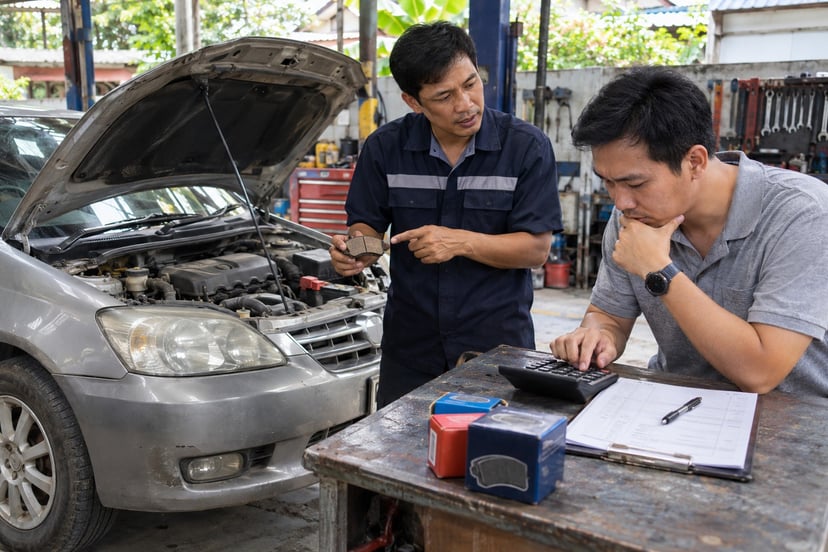
The most straightforward way to determine whether repairing a used car before selling is worthwhile is to compare the net proceeds after deducting repair costs, rather than simply comparing the selling prices before and after repairs.
Car owners should use actual offers from potential buyers instead of assuming that a newer-looking car will automatically command a higher selling price.
Formula for Calculating Whether Car Repairs Are Worthwhile
Net proceeds after repairs = Selling price after repairs - Repair costs
Net financial difference = Net proceeds after repairs - As-is selling price
Example 1: Selling the Car As-Is Is More Cost-Effective
Suppose your car can be sold as-is for THB 280,000, but you need to spend THB 18,000 on repairs to increase its selling price to THB 290,000.
After deducting the repair costs, your net proceeds would be THB 272,000, which is THB 8,000 less than selling the car as-is.
Example 2: Repairing the Car Before Selling Is More Cost-Effective
Suppose you spend only THB 5,000 on repairs and receive an increased offer from THB 280,000 to THB 292,000.
Your net proceeds would be THB 287,000, which is THB 7,000 more than selling the car as-is.
| Comparison | Example 1 | Example 2 |
|---|---|---|
| As-is selling price | THB 280,000 | THB 280,000 |
| Repair costs | THB 18,000 | THB 5,000 |
| Selling price after repairs | THB 290,000 | THB 292,000 |
| Net proceeds after repairs | THB 272,000 | THB 287,000 |
| Difference compared with selling as-is | -THB 8,000 | +THB 7,000 |
| More cost-effective option | Sell as-is | Repair before selling |
Note: Both scenarios use hypothetical figures for illustrative purposes only. Actual selling prices after repairs should be confirmed with potential buyers. Other relevant expenses should also be taken into consideration.
What to Check Before Repairing Your Car for Sale
Before sending a car to a workshop, owners should determine how much each proposed repair is likely to affect its resale value. Not every imperfection needs to be fixed, especially if you intend to sell your used car in the near future.
Consider the following steps before spending money on repairs:
- Assess the car's current as-is value: Obtain purchase offers from multiple sources to establish an estimated vehicle value before investing in repairs.
- Review the required repairs and costs: Ask a mechanic to assess the damage and distinguish essential repairs from cosmetic improvements.
- Compare selling prices before and after repairs: Ask potential buyers whether specific repairs are likely to increase the selling price and whether that increase justifies the expense.
- Consider the time required for repairs: If replacement parts need to be ordered or repairs will take a considerable amount of time, factor the potential delay into your decision.
After comparing all the available information, if the repair costs exceed the expected increase in selling price, selling the car as-is may be the more suitable option. There is no need to spend money addressing every imperfection before selling.
Expert Tip: Get a Car Valuation Before Paying for Repairs
Have your car valued in its current condition before sending it for repairs. This gives you a reference price to compare against repair expenses and helps you avoid spending money without knowing how much additional resale value the repairs may generate.
Tips for Selling a Car As-Is at a Fair Price
Having scratches or components that require repairs does not necessarily mean that your car cannot be sold or that you must accept a low offer. Different used car buyers have different criteria for evaluating vehicle condition.
Car owners should therefore prepare accurate and complete information to help ensure a smoother selling process.
- Present the car's actual condition: Take clear photographs of the exterior, interior and significant imperfections. Disclose any unusual symptoms or damage that has not been repaired.
- Prepare maintenance records: Gather receipts and service centre records to demonstrate how the vehicle has been maintained throughout its ownership.
- Check the market value of similar vehicles: Compare cars of the same model with similar registration years, mileage and condition. Keep in mind that advertised prices may differ from actual transaction prices.
- Choose a suitable selling channel: If your vehicle has multiple defects, approaching buyers who accept cars in their current condition may help eliminate unnecessary repairs before selling.
- Prepare the necessary selling documents: Check the vehicle registration book and ownership status, and document significant defects that the buyer has acknowledged in the relevant sales paperwork.
Providing accurate and transparent information helps buyers assess the vehicle more effectively and reduces the likelihood of disputes after the sale, particularly for vehicles with an accident history, flood damage or previous repairs involving major components.
Common Mistakes to Avoid When Selling a Car As-Is
- Repairing the car before obtaining an as-is valuation.
- Spending money on expensive paintwork or replacement parts without assessing their financial benefits.
- Assuming advertised used car prices represent actual transaction prices without considering other factors.
- Concealing accident history, flood damage or significant defects.
- Allowing potential buyers to test-drive a vehicle with unresolved safety issues.
- Accepting an offer without comparing prices from multiple potential buyers.
Selling a Car As-Is or Repairing It: It Depends on Cost and Condition
Repairing a car before selling is not necessarily the best option for every vehicle. Whether it is worthwhile depends on the car's condition, repair expenses and the price potential buyers are willing to pay.
If the damage is minor and does not affect the vehicle's usability, selling the car as-is may help save both time and money. However, if the vehicle has problems that affect safety, have a qualified mechanic inspect and address them appropriately before driving the car.
The key is to assess your car's current value and compare potential net proceeds before committing to unnecessary repairs.
Frequently Asked Questions (FAQs)
1. Should I repaint my car before selling if it has minor scratches?
Consider the size and depth of the scratches, as well as the cost of repairing them. Minor scratches may not significantly affect the selling price. If repainting costs more than the expected increase in resale value, selling the car as-is may be more cost-effective.
2. Can I sell a car as-is if it has engine problems?
Yes, you can sell a car as-is even if it has engine problems, provided you find a willing buyer. However, you should clearly disclose the mechanical issues, as the vehicle's condition and anticipated repair costs are important factors in determining its value. If the car is unsafe, it should not be driven or test-driven.
3. Does repairing a car before selling always increase its resale value?
No. Used car buyers consider the vehicle's condition, age and current market value. Although certain repairs may increase the selling price, they may not be financially worthwhile if the repair costs exceed the additional resale value.
4. Is it better to sell a car as-is privately or to a used car dealer?
Selling a car directly to a private buyer may result in a higher selling price, but it requires more time to negotiate and manage the transaction. Selling to a used car dealer may be more convenient and faster, although the offer depends on the vehicle's condition and the buyer's requirements. Both channels may accept cars sold as-is if the buyer agrees to the condition.
5. Should I replace my car tyres before selling?
If the tyres remain safe and suitable for use, replacing them before selling may not be necessary. However, if they are severely damaged or unsafe, have a mechanic inspect and address the problem before driving the vehicle or allowing potential buyers to test-drive it.
6. Can I sell a car that has previously been involved in an accident and repaired?
Yes, provided there is a buyer willing to accept the vehicle's condition and agreed selling price. Owners should disclose the accident history, repair details and significant damage accurately, even if the vehicle has already been repaired.
7. Should I get a car valuation before or after repairs?
It is advisable to obtain a car valuation in its current condition before making repairs. This provides a reference price for comparing repair expenses against the expected selling price after repairs, helping you avoid unnecessary spending.
8. What documents do I need to sell a car as-is in Thailand?
You should prepare the vehicle registration book, the owner's identification documents, relevant ownership documents and the necessary sales or ownership transfer paperwork. Significant defects acknowledged by the buyer should also be documented. Additional documentation may vary depending on the vehicle's ownership status and the conditions of the transaction.
If you want to sell your used car without spending time negotiating with multiple buyers yourself, Motorist Thailand can help simplify the process. With car valuation services and access to a network of used car buyers, Motorist helps you explore competitive offers and reduce the hassle associated with selling your vehicle.
Get your car valued with Motorist Thailand before deciding whether to repair or sell your car.