EV battery certification: the next frontier for used car trust in southeast Asia
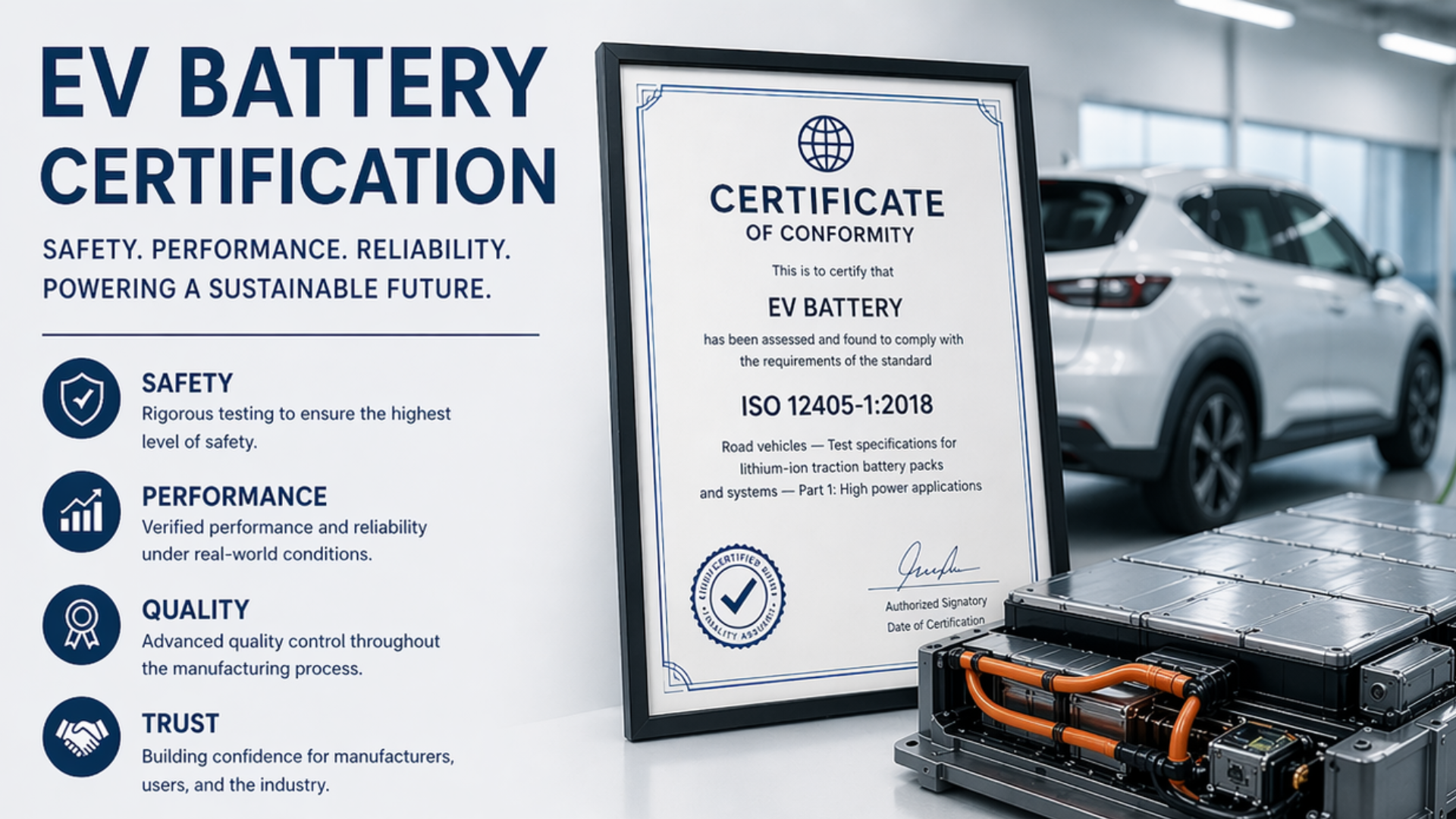
EV battery certification: the next frontier for used car trust in southeast Asia
As electric vehicles (EVs) accelerate across Southeast Asia, the used car market is entering a new phase—one defined not just by price and condition, but by battery trust. For decades, buyers evaluated used cars based on mileage, service history, and accident records. In the EV era, one question now outweighs all others: “How healthy is the battery?”
This is where EV battery certification emerges as a critical trust layer—reshaping how vehicles are valued, sold, and financed across the region.
Why EV battery trust is becoming a deal-breaker
Unlike internal combustion engine (ICE) vehicles, where wear and tear are relatively predictable, EV batteries introduce new uncertainties:
- Battery degradation over time
- Charging behavior impacting lifespan
- Climate effects (heat and humidity in Southeast Asia)
- High replacement costs
A degraded battery can reduce range by 20–40% and significantly impact resale value. Without clear data, buyers face a confidence gap—and often walk away.
What is EV battery certification?
EV battery certification is a standardized assessment of a battery’s health and performance, typically including:
- State of Health (SoH) percentage
- Remaining usable capacity
- Charging performance metrics
- Thermal and safety checks
- Diagnostic scan reports
This certification is usually conducted by:
- Authorized service centers
- Third-party inspection companies
- OEM-backed programs
The goal is simple: Turn uncertainty into measurable, verifiable data.
Why Southeast Asia needs it now
Southeast Asia presents a unique set of conditions that make battery certification especially important:
1. Rapid EV adoption, limited awareness
Many first-time EV buyers lack technical understanding of battery health.
2. Hot and humid climate
High temperatures accelerate battery degradation, making condition checks essential.
3. Growing used EV supply
As early adopters begin reselling vehicles, the secondary market is expanding quickly.
4. Trust deficit in used car transactions
Historically, used car markets in the region have struggled with transparency.
Battery certification directly addresses this issue by introducing data-backed trust.
How battery certification changes the used EV market
1. Standardized pricing models
With verified battery health:
- Buyers can compare vehicles more accurately
- Sellers can justify pricing
- Market pricing becomes more rational
2. Faster transactions
When trust barriers are removed:
- Buyers make quicker decisions
- Dealers close sales faster
- Platforms reduce friction
3. Improved financing and insurance access
Banks and insurers are more likely to:
- Approve loans
- Offer better rates
When battery condition is certified and predictable.
4. Stronger resale value
Vehicles with certified batteries:
- Retain value better
- Attract more serious buyers
Key players and ecosystem development
Several stakeholders are shaping this emerging ecosystem:
OEMs (Original Equipment Manufacturers)
Brands like BYD, Tesla, and Hyundai are beginning to:
- Offer battery diagnostics
- Provide warranty extensions
- Build certified used EV programs
Third-party platforms
Companies like Motorist, Carsome, and regional startups are integrating:
- Inspection services
- Data-driven listings
- Transparency tools
Motorist, in particular, is evolving toward a full-stack automotive ecosystem, where certification, pricing insights, and ownership tools are combined.
Governments and regulators
Some Southeast Asian governments are exploring:
- Standardized EV inspection frameworks
- Consumer protection policies
Challenges to widespread adoption
Despite its potential, EV battery certification still faces hurdles:
Lack of standardization
Different brands and providers use different metrics, making comparisons difficult.
Cost of certification
Inspection services may add cost, especially for lower-priced vehicles.
Data accessibility
Not all EVs provide open access to battery diagnostics.
Consumer awareness
Many buyers are still unaware that battery certification exists—or why it matters.
The future: from optional to expected
Looking ahead, EV battery certification is likely to become:
- A default requirement in used EV listings
- Integrated into online marketplaces
- Linked with digital vehicle records
In the same way that service history became standard for ICE cars, battery health reports will become non-negotiable for EVs.
Conclusion
As Southeast Asia’s EV market matures, trust will become the defining factor in used car transactions.
EV battery certification is not just a technical feature—it’s a market enabler.
- It reduces uncertainty
- Builds transparency
- Aligns buyers, sellers, and platforms
In the near future, the question won’t be:“Should I check the battery?”But rather:“Where is the certification report?”
FAQ: EV battery certification explained
Q1: What is a good battery health (SoH) for a used EV?
Typically:
- 90–100% → Excellent
- 80–89% → Good
- Below 80% → Consider carefully
Q2: Does battery certification guarantee no future issues?
No, but it significantly reduces uncertainty by providing current condition data.
Q3: Is battery replacement very expensive?
Yes. Depending on the model, it can cost a significant portion of the car’s value.
Q4: Can I trust third-party certification?
Reputable providers using standardized tools are generally reliable—always check credentials.
Q5: Will certification increase the car price?
Yes—but it also increases buyer confidence and resale value.
Want a car valuation? Contact us to get a free car valuation within 24 hours…