Government approves new 35% tax on imported EVs: What are the impacts to car prices in Thailand?

A major 35% EV import tax hike is on the horizon for 2027! Let's break down what this means for new car prices, Chinese automakers, and used car values in Thailand.
Following the official mobile Cabinet meeting in Udon Thani province on November 3, 2026, the government resolved to approve a crucial agenda that has shaken the entire Thai automotive industry. That is the restructuring of the new imported EV tax, targeting an increase in the excise tax for Completely Built-Up (CBU) imported electric vehicles to a maximum rate of 35%, which will officially take effect from January 1, 2027, onwards.
This policy change does not solely impact the new car market but also creates a massive ripple effect on the used car market, both in terms of used car prices in Thailand and the future direction of setting median prices for used cars. This article will take everyone into an in-depth look at the details of the Cabinet resolution, its impact on car manufacturers, pricing, and the trends in the used car market that consumers need to prepare for.
Summary of the Udon Thani Mobile Cabinet Resolution on Restructuring Imported EV Taxes
The mobile Cabinet resolution on November 3, 2026, approved the guidelines for restructuring the electric vehicle excise tax as proposed by the National Electric Vehicle Policy Committee (EV Board). The primary goal is to reduce the disadvantage of domestic car manufacturers and attract actual investment in establishing production bases in Thailand. The details of the imported EV tax adjustments are as follows:
- Imported Battery Electric Vehicles (BEV): Increase the excise tax rate from the original 10% jumping up to 35% (an increase of 25%).
- Imported Range Extended Electric Vehicles (REEV): Increase the excise tax rate from the original 15% up to 35% (an increase of 20%).
This new 35% excise tax rate will begin enforcement from January 1, 2027, onwards. It targets the group of Completely Built-Up (CBU) imported electric vehicles that do not participate in the government's investment promotion measures, or car manufacturers that solely import cars for sale without any plans to build factories or use locally manufactured components in Thailand.
Why Did the Government Have to Increase the Electric Vehicle Excise Tax?
The key reason behind finalizing the 35% figure is a strategy called “Investment-Driven Import” and “High Value-Added Local Content.” Over the past few years, Thailand has faced an influx of imported electric vehicles. While this helps stimulate the use of clean energy, if left unchecked, it could impact the supply chain of the traditional Thai automotive industry, which employs hundreds of thousands of people. This tax increase thus serves as a “hardline measure” used by the government to pressure foreign car manufacturers into deciding to set up production plants in Thailand if they wish to maintain competitive pricing in the market.
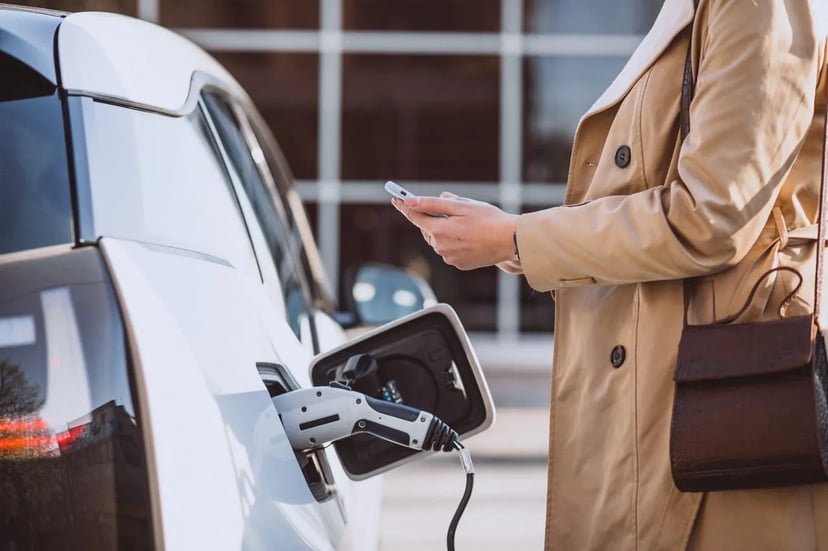
The Future of Chinese EVs... What Will the Import Tax Be Like?
When talking about imported electric vehicles, it is undeniable that car manufacturers from China are the main players in the market. This adjustment of the import tax on EVs from China will create an extremely significant turning point.
- The end of the price war from imported cars: In the recent period, we have seen Chinese car manufacturers fiercely slashing the prices of imported EVs. However, with the import tax on Chinese EVs set to soar to 35% in 2027, the cost of CBU imported cars will rise significantly. There is a preliminary assessment that “if” car manufacturers pass this entire tax burden onto consumers, the prices of imported EVs could increase by an average of 200,000 to 250,000 baht per vehicle.
- The advantage for car manufacturers investing in Thai production (CKD): For Chinese EV makers or European manufacturers that have already established Completely Knocked Down (CKD) manufacturing and assembly plants in Thailand, they will gain a massive competitive advantage. This is because they will not be hit by this 35% excise tax barrier. This will cause consumers to turn to buying more domestically produced cars, which positively impacts the overall economy.
- Rushing purchase decisions before 2027: The short-term impact that will occur is that consumers planning to buy an imported EV might rush their purchasing decision within the years 2025-2026, before the new EV import tax rates take effect. This could make the new car market particularly lively over the next 1-2 years.
Used Car Price Trends in Thailand After the EV Tax Restructuring
Many might wonder, what does increasing the tax on newly imported cars have to do with used car prices? In reality, the new car and used car markets are inextricably linked. This movement in government measures will impact used car prices in Thailand in several dimensions, as follows:
1. The slowdown of depreciation in the used EV segment
Recently, used EVs have faced severe depreciation problems due to the continuous new car price war. This caused used car dealerships and buyers to appraise the trading prices of used EVs relatively low to minimize risks. However, with the resolution to increase the import tax to 35% in 2027, the trend for new imported EV prices will rise, or at least the price war will subside. This factor will help support the median prices of used electric vehicles, providing more stability. Those currently holding EVs might see that the selling prices of their used cars will not plummet as drastically as they did over the past 1-2 years.
2. The recovery of median used car prices in the Internal Combustion Engine (ICE) segment
The most interesting positive impact falls on the used Internal Combustion Engine (ICE) and Hybrid Electric Vehicle (HEV) segments. Previously, the purchase prices for used petrol/diesel cars dropped significantly because consumers fled to buy increasingly cheaper new EVs. When the 35% tax barrier makes imported EVs more expensive, the price gap between new EVs and used ICE vehicles will widen. This will attract consumers with limited budgets to turn back and look for well-conditioned used petrol/diesel or hybrid cars. As a result, demand in the used car market will recover, and it is expected that the median used car prices for popular ICE models from 2026 into 2027 will become stronger and more stable.
3. Used car dealerships and financial institutions will be bolder in granting loans
The uncertainty of new EV prices once caused turbulence in the financing system. However, the clarity from the Udon Thani mobile Cabinet resolution setting the January 1, 2027 deadline allows financial institutions and used car dealers to forecast market directions more accurately. Establishing median used car prices will have clear standards, helping finance companies feel more confident in appraising loan amounts at more reasonable rates. This will positively affect the liquidity of the overall used car trading market.
How to Prepare in the Era of Automotive Tax Structure Transition
For those who are currently planning to buy or sell a car during this period, information is the most critical weapon.
- Those who want to buy an imported EV: If you have an eye on a specific model that is a pure CBU import, making the purchase decision within 2026 could save you hundreds of thousands of baht before the new tax is added in 2027.
- Those who want to buy a used car: This is a great time to look for well-conditioned used cars at good prices, especially ICE or hybrid vehicles. In the future, as new car prices shift upwards, used car prices in Thailand are also likely to stabilize or adjust upwards according to market mechanisms.
- Those who want to sell their existing car: If you are worried about used car purchase prices in a volatile market, knowing the true and fair value of your car is the first thing to do. No matter how the market changes, having a reliable intermediary for price valuation will help ensure you are not at a disadvantage.

Raising the Tax on Imported EVs is a Positive Stimulus for the Thai Car Market
The announcement to increase the imported EV (CBU) tax to 35% is considered a clear signal from the government to protect and elevate the Thai automotive industry into a sustainable clean energy vehicle production base. This policy will not only shift the strategies of Chinese EV manufacturers, forcing them to set up factories in Thailand, but it will also indirectly benefit the stabilization of median used car prices for both the EV and ICE segments. This brings back reliability and predictability to the used car trading market.
If you are someone who is planning to change cars and wants to know the value of your old car to use as capital for a new one—whether it be an EV or an ICE vehicle—you can easily start by appraising the selling price of your used car with a standardized and highly accurate platform like Motorist. This is a leading automotive expert platform offering free, no-cost used car valuation services. With a database system that is constantly updated according to market conditions, it ensures you will get the best and fairest used car selling price, allowing you to confidently prepare for the tax structure changes.
Want a car valuation? Contact us to get a free car valuation within 24 hours…
Frequently Asked Questions (FAQs)
1. What is the latest Cabinet resolution regarding the adjustment of imported EV taxes?
- The government resolved to approve an increase in the excise tax for Completely Built-Up (CBU) imported electric vehicles to 35% in order to stimulate investment in setting up manufacturing plants in Thailand instead of relying on imports.
2. When will the new 35% imported EV tax rate take effect?
- The new 35% excise tax rate will officially take effect from January 1, 2027, onwards.
3. What types of EVs are subject to this tax increase?
- It covers Completely Built-Up (CBU) imported electric vehicles, which include Battery Electric Vehicles (BEV) adjusting from 10% to 35%, and Range Extended Electric Vehicles (REEV) adjusting from 15% to 35%.
4. How does this tax increase affect the prices of brand new imported EVs?
- Imported car prices are expected to soar. If car manufacturers pass the tax burden onto consumers, the prices of brand-new imported EV models could rise by an average of 200,000 to 250,000 baht per vehicle.
5. Will Chinese EV makers that have production plants in Thailand (CKD) be hit by this tax?
- This 35% import tax will not hit them and will give them an even greater competitive advantage, as they will not have to bear the burden of import tax costs like car manufacturers without a production base in Thailand.
6. What will used EV prices be like after this policy is implemented?
- The trend for used EV prices will stabilize and become more stable. The problem of severe price drops will slow down because the market prices of brand-new imported models will increase.
7. In what direction will the used internal combustion engine (petrol/diesel car) market be impacted?
- Prices will recover and become stronger. Because the price gap between imported EVs and used ICE vehicles will widen, more consumers will turn back to buying well-conditioned used petrol/diesel cars.
8. If I want a brand new imported EV, when should I decide to buy?
- You should consider making the purchase decision within 2025-2026, before the new 35% tax structure takes effect in 2027, to avoid the impending increase in car prices.
9. How does this policy benefit finance companies and used car dealerships?
- The clarity of the policy helps finance companies and used car dealerships forecast the market and determine median prices more accurately. This makes them more confident in approving loans and buying cars for their dealerships.
10. I want to know the median used price of my own car right now; what should I do?
- You can access and use the used car valuation and price appraisal service for free, at no cost, at https://www.motorist.co.th/car-valuation

