mReview: 2026 Toyota Yaris Cross – Is it still worth buying? Thailand's top-selling B-SUV with the latest feature upgrades.
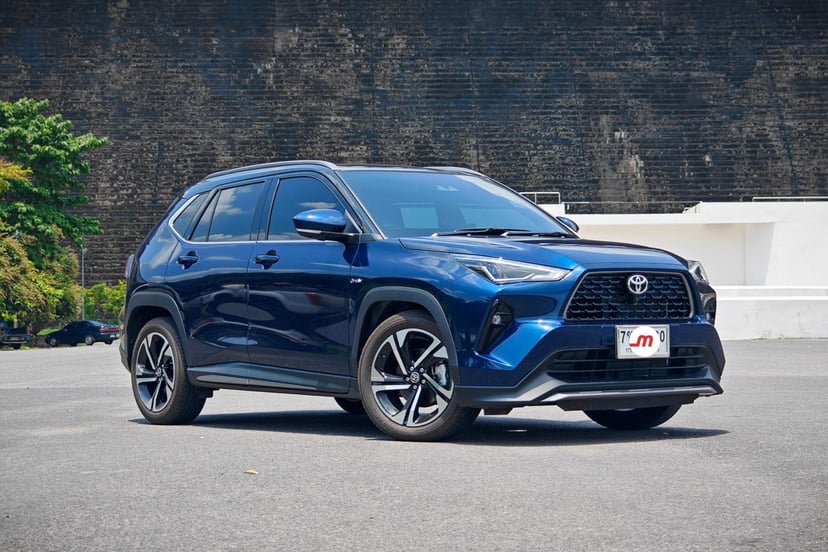
2026 Toyota Yaris Cross review – Price hike, upgraded base trim, and why it remains a top-seller in a fiercely competitive mid-tier market.
What’s Great?
- Abundant versatility, perfectly suited for daily driving and diverse usability.
- Updated Adaptive functions for the entry-level trim, making it significantly more comprehensive in real-world use.
- Ground clearance of up to 210 mm, allowing it to navigate flooded roads or obstacles better than others in its class.
What’s Good?
- Fuel economy that easily achieves a real-world rate of 20-22 km/L under normal conditions.
- Comprehensive functions and technology, with the “Premium” variant standing out as the most worthwhile choice.
- Truly accommodates 4 occupants, making it highly ideal for small families.
What’s Not Great?
- Relatively high cabin noise intrusion, from both the engine and wind.
- The touchscreen is smoother to the touch, but the display resolution remains poor.
- The design language is starting to look dated; however, if you prioritize pure utility, it can be easily overlooked.
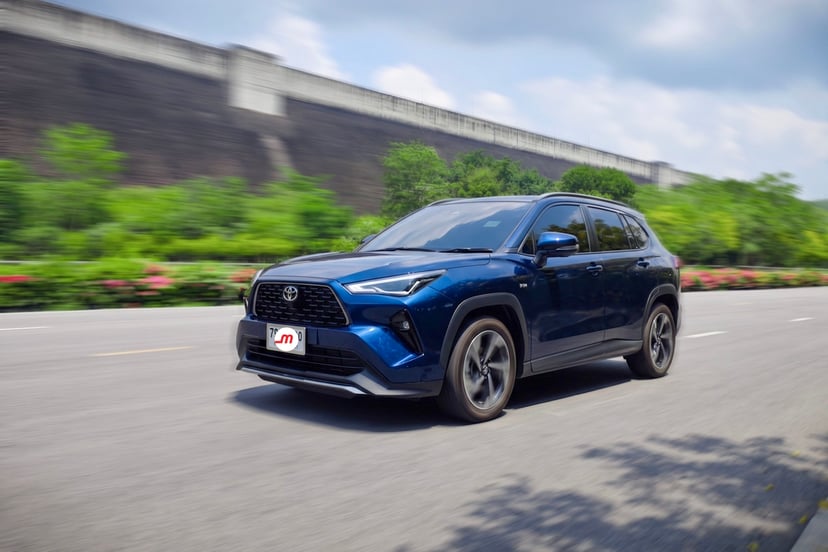 The Yaris Cross remains a highly versatile vehicle for daily use, effortlessly supporting various driving conditions.
It is an exceptionally ideal car if you are looking for your first vehicle or the sole car for your household. It is fuel-efficient in heavy traffic, capable enough for long-distance trips, and spacious for carrying luggage on various occasions. The ground clearance of over 210 mm is perfectly suited for the rainfall and flooding situations across many areas in Thailand.
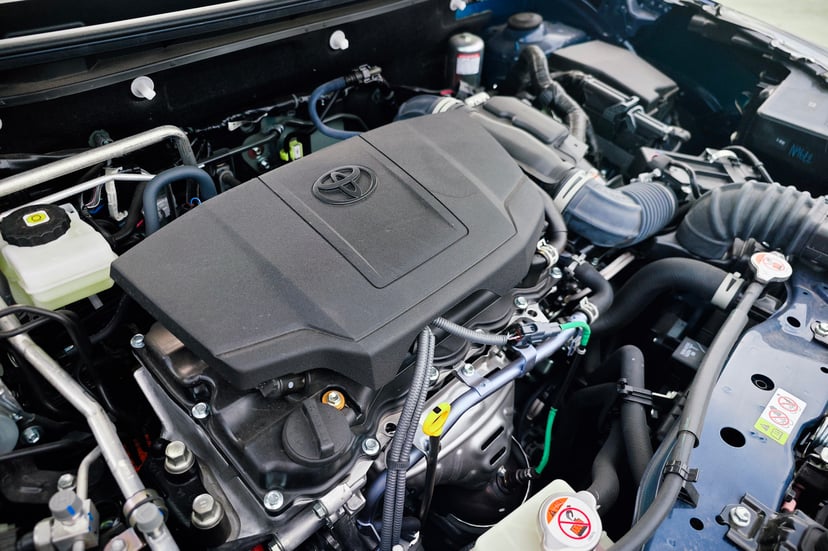 The powertrain is a hybrid, generating electricity via a 1.5-litre 4-cylinder DOHC 16-valve petrol engine to charge a 0.7 kWh LFP battery, distributing power between the electric motor and the engine down to the wheels.
Although the official ECO Sticker claims a fuel economy of 26.3 km/L, real-world usage hovers around 20-22 km/L, which is respectable given its size and utility. However, the engine noise when it kicks in can be startlingly loud at times. Furthermore, during long-distance highway trips, you might need to engage “PWR” mode to safely overtake at higher speeds, which may slightly increase energy consumption at speeds of 100+ km/h.
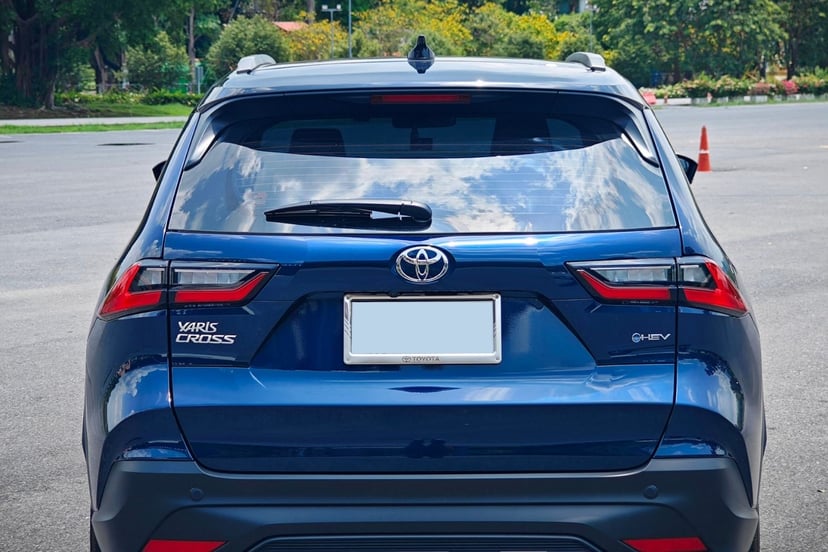
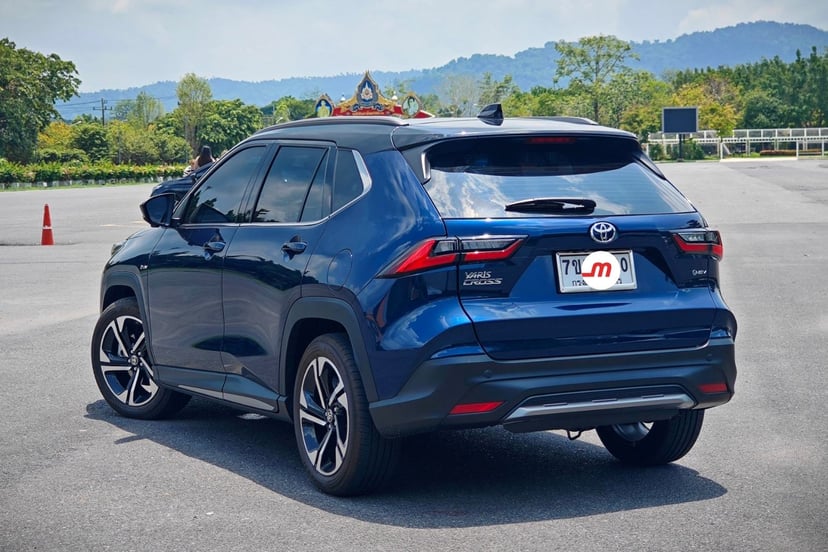 The rear design remains unchanged since its initial launch, along with other hidden functions.
For the entry-level “Smart” trim, you won't get many modern convenience functions. For instance, the tailgate is a manual hand-operated unit, there is no 360-degree surround-view camera, no Blind Spot Monitoring system, and you only get 2 rear parking sensors.
Moving up to the “Premium” and “Premium Luxury” trims, you are treated to a power tailgate with a kick sensor, a Walk-Away Auto Lock function, Rear Cross Traffic Alert, front and rear parking sensors, and a fully loaded blind-spot warning system.
However, one element they all share is a generous boot capacity stretching up to 470 litres, which expands to over 1,000 litres when the rear seats are folded flat, complemented by an additional 90-litre underfloor multi-purpose storage space!
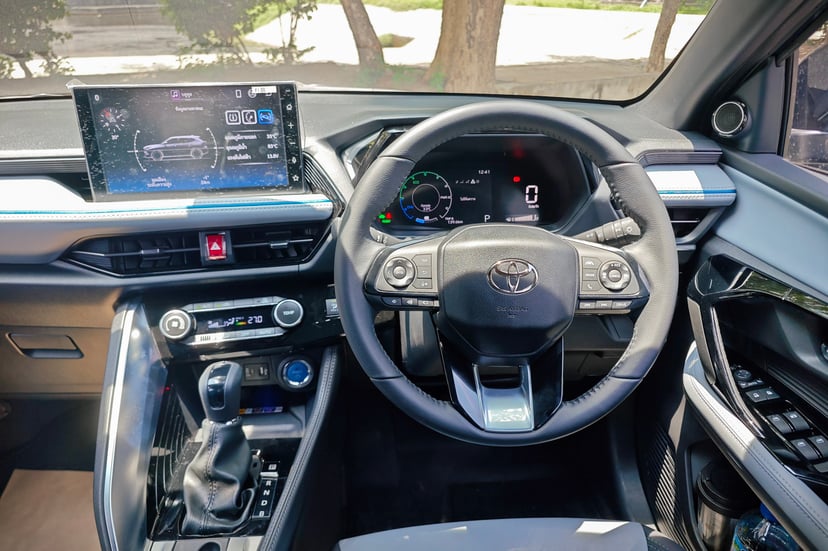 To be completely honest, this design in 2026 might no longer provide a 'wow' factor... but it still functions with high efficiency in real-world use.
The provided multi-function steering wheel features straightforward button iconography that is easy to understand. The physical buttons on the center console are equally user-friendly and clearly zoned—separating the climate controls, powertrain operations, and the infotainment layout.
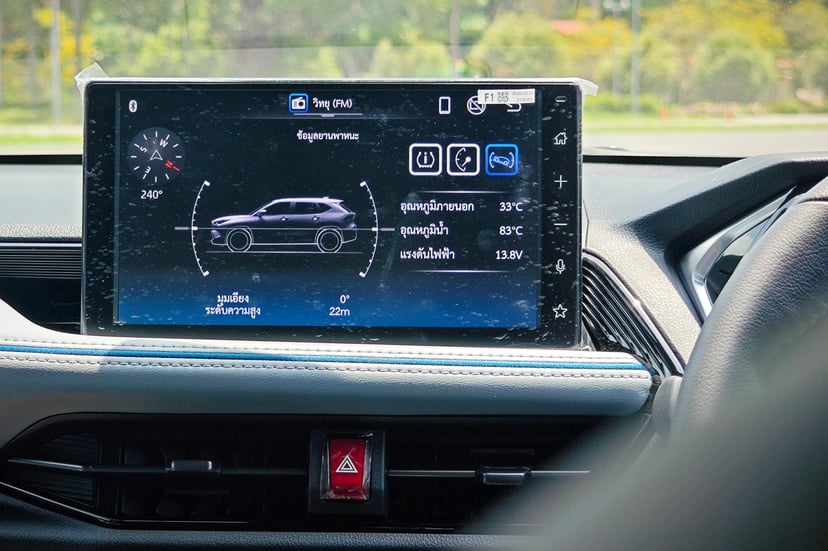 Nevertheless, the 10.1-inch touchscreen, which is claimed to have been updated for slightly smoother touch responsiveness, is simple and uncomplicated to use.
The only drawbacks are the low pixel density of the display and the rather poor resolution of the surround-view camera, which feels underwhelming for a car priced at over 800,000 Baht in 2026... but it gets the job done regardless.
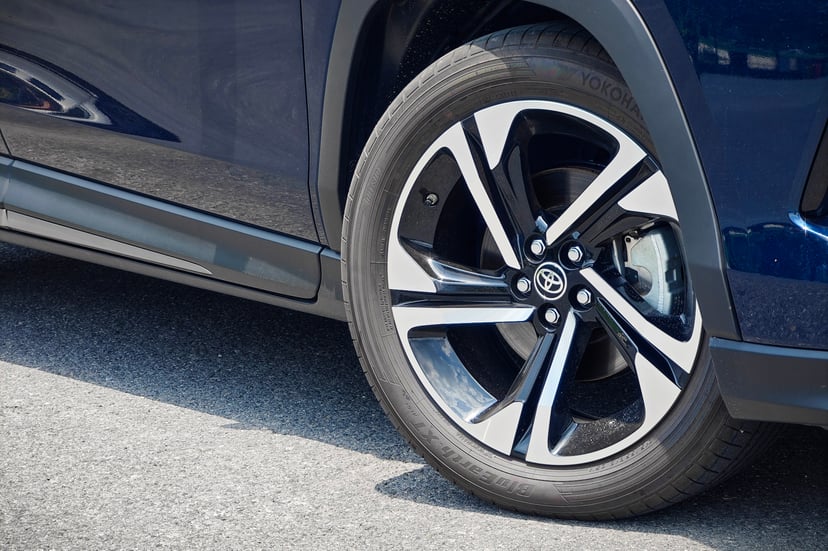 The Premium Luxury trim receives silver accents all around the exterior body.
These are subtle details for those who want the absolute most out of their purchase... such as these 18-inch alloy wheels with a polished chrome finish. It also features silver trim on the front grille, lower front and rear bumpers, window frames, and roof rails, alongside a massive Panoramic glass roof that extends all the way to the rear seats.
The Verdict
In conclusion, the Toyota Yaris Cross in 2026 remains a vehicle that answers comprehensive usability needs, a fact that is difficult to argue against... provided that you solely focus on "comprehensive usability." Because the design leans entirely into pure utility, easy to use, functional, but not particularly easy on the eyes or premium to the touch. This is coupled with a fair amount of cabin noise and a high-speed acceleration profile that doesn't quite match the car's aesthetic character.
However – the pricing structure starting at 849,000 Baht for the Smart trim up to 909,000 Baht for the top-tier Premium Luxury feels a bit steep when comparing spec sheets on paper with new competitors or electric vehicles in this price bracket. But Toyota is Toyota. You receive the absolute highest peace of mind regarding after-sales service, maintenance, and a rock-solid resale value—a monumental task that many rival brands simply cannot deliver in today's market.
Technical Specification: 2026 Toyota Yaris Cross | ||
|---|---|---|
Starting Price (at time of publishing): ฿849,000 | CO2 emission: 79–86 g/km. | |
Engine: 2NR-VEX 4-cylinder inline, 16 valves. Combine with synchronous electric motor. | Capacity: 1,496 cc | Power : 81.6 kW (111 PS) |
Transmission: E-CVT | Driven Wheels: Front | Consumption: 26.3 km/L |
0-100 km/h: 10.6 - 12.4 seconds | Top Speed: 160–165 km/h | Fuel Tank Capacity: 36 litres |
Dimensions (L x W x H): 4,310 mm x 1,770 mm x 1,615 mm | Wheel Base: 2,620 mm | Cargo Capacity: 458 litres |
Claim your free car valuation today!
Want a car valuation? Contact us to get a free car valuation within 24 hours…