Cost comparison: gasoline vs ev charging in Thailand
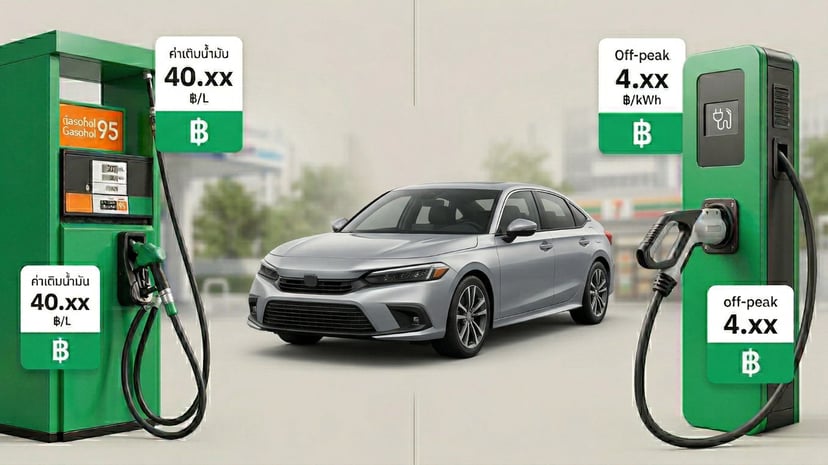
Cost comparison: gasoline vs ev charging in Thailand
Thailand’s automotive landscape is undergoing a major transformation in 2026. Electric vehicles (EVs) are no longer a niche option—they are rapidly becoming mainstream. Driven by government incentives, expanding charging infrastructure, and rising fuel costs, more consumers are seriously considering switching from gasoline-powered vehicles to EVs.
But one key question remains:
“Is owning an EV actually cheaper than driving a gasoline car in Thailand?”
And more importantly:
“Does the long-term value justify the switch?”
This in-depth guide breaks down real-world costs—per kilometer, monthly expenses, maintenance, and hidden costs—so you can make an informed, financially sound decision based on Thailand’s 2026 context.
Cost per Kilometer: The Most Important Metric
Understanding cost per kilometer is crucial when comparing EVs and gasoline vehicles because it reflects real usage expenses.
Gasoline Vehicles
In 2026, fuel prices in Thailand remain relatively high and volatile due to global oil market fluctuations.
- Average gasoline price: 36–40 THB per liter
- Average fuel efficiency: 12–15 km per liter
Calculation:
Cost per kilometer = 2.5 – 3.3 THB per km
However, real-world costs may increase if:
- You frequently drive in heavy traffic
- You own an older, less efficient car
- Your driving habits include aggressive acceleration or braking
Electric Vehicles (EVs)
EV costs depend heavily on where you charge your vehicle. There are two primary scenarios:
Home Charging
- Electricity cost: ~4.0 – 4.5 THB per kWh
- EV efficiency: 6–7 km per kWh
Calculation:
Cost per kilometer = 0.6 – 0.8 THB per km
Public Charging / Fast Charging
- Electricity cost: ~6 – 8 THB per kWh
Calculation: 1.0 – 1.3 THB per km
Clear Comparison Table
Vehicle Type Cost per km
| Gasoline Car | 2.5 – 3.3 THB |
| EV (Home Charging) | 0.6 – 0.8 THB |
| EV (Fast Charging) | 1.0 – 1.3 THB |
EVs can reduce energy costs by 60% to 75% per kilometer
Monthly Cost Comparison: Real-Life Scenario
Let’s look at a typical usage case:
- Driving distance: 1,500 km per month
Gasoline Vehicle → 3,750 – 5,000 THB per month
EV (Home Charging) → 900 – 1,200 THB per month
EV (Public Charging Heavy Use) → 1,500 – 2,000 THB per month
Key Insight
- Charging at home delivers maximum savings
- Relying on fast chargers reduces savings, but EVs are still cheaper
- Driving behavior and charging habits significantly impact total cost
Long-Term Cost Analysis: Where EVs Truly Win
While short-term savings are attractive, the real financial advantage of EVs becomes clear over time.
Maintenance Costs
Gasoline Vehicles
Gas-powered cars have complex mechanical systems with many moving parts.
Typical maintenance includes:
- Engine oil changes every 5,000–10,000 km
- Transmission servicing
- Engine-related repairs
Average yearly cost: 10,000 – 20,000 THB
Electric Vehicles
EVs have significantly fewer moving parts.
They do NOT require:
- Engine oil changes
- Traditional transmission maintenance
Average yearly cost: 5,000 – 10,000 THB
Savings: 30% – 50% lower maintenance costs
Battery Replacement Costs
One of the biggest concerns for EV buyers is battery lifespan and replacement cost.
- Battery lifespan: 8 – 10 years
- Replacement cost: 150,000 – 400,000 THB
- Warranty: Typically 8 years or 160,000 km
Important Insight:
Battery technology in 2026 has improved significantly:
- Longer lifespan
- Lower degradation rates
- Declining replacement costs over time
For most users, battery replacement will not be an immediate concern.
Hidden Costs Most Buyers Overlook
Upfront Purchase Price
EVs are still generally more expensive upfront compared to gasoline cars.
However:
- Government subsidies can reduce costs by up to 100,000 THB
- Lower operating costs offset the initial price over time
Charging Time
- Home charging: 6–10 hours
- Fast charging: 30–60 minutes
Time is an indirect cost, especially for users who value convenience.
Charging Infrastructure
Thailand’s charging network has expanded rapidly in 2026, but:
- Rural areas may still have limited access
- Planning is required for long-distance travel
Energy Price Stability
- Fuel prices: Highly volatile
- Electricity prices: More stable and predictable
EVs offer better cost predictability in the long run
User-Based Analysis: Which Vehicle Fits Your Lifestyle?
Urban Drivers
- Daily commuting
- Predictable routes
- Access to home charging
EV is the clear winner
Long-Distance Drivers
- Frequent intercity travel
- Limited charging stops in some areas
Gasoline cars may still be more practical
Business Owners / Fleet Users
- High mileage
- Frequent usage
EVs provide significant long-term cost savings
Environmental and Policy Considerations
Beyond cost, EV adoption aligns with:
- Thailand’s carbon reduction goals
- Government EV promotion policies
- Potential future tax benefits or restrictions on ICE vehicles
Choosing EVs may provide future financial and regulatory advantages
Final Verdict: Is EV Worth It in Thailand
EV is ideal if you:
- Drive regularly
- Can charge at home
- Want to reduce long-term expenses
Gasoline cars are still suitable if you:
- Travel long distances frequently
- Lack access to charging infrastructure
- Prioritize convenience over cost savings
Key Takeaways
- EVs are significantly cheaper per kilometer
- Monthly savings can reach up to 70%
- Maintenance costs are lower
- Long-term ownership favors EVs
- Lifestyle and charging access are critical decision factors
FAQ: Fuel vs EV Charging Costs in Thailand
1. What is the cost per kilometer for gasoline cars vs EVs in Thailand?
On average:
- Gasoline cars: ~2–3 THB/km
- EVs: ~0.5–1 THB/km (home charging)
EVs can reduce energy costs by 50–70% per kilometer
2. Is charging an EV at home really cheaper?
Yes. Residential electricity in Thailand averages around 4–5 THB per kWh, making home charging the most cost-efficient option for daily use.
3. How expensive is public EV charging in Thailand?
Public charging, especially DC fast charging, typically costs:
- ~6–10 THB per kWh
- Around 1–2 THB/km
Still cheaper than gasoline, but less savings compared to home charging.
4. How does a full tank of gas compare to a full EV charge?
Estimated comparison:
- Gasoline: 1,500–2,000 THB per tank (range ~500–700 km)
- EV: 300–600 THB per full charge (range ~300–500 km)
EVs have a significantly lower cost per distance.
5. Will rising electricity prices affect EV savings?
Yes, but:
- Electricity prices are generally more stable than fuel prices
- EVs are still likely to remain cheaper in the long term
6. What hidden costs are associated with EV charging?
Additional costs may include:
- Home charger installation (~10,000–50,000 THB)
- Electrical system upgrades
- Public charging service fees
7. Are EVs always cheaper than gasoline cars?
Not always. EVs may be less cost-effective if:
- You drive infrequently
- You rely mostly on public charging
- Your electricity costs are high
8. How does driving range compare between EVs and gasoline cars?
- Gasoline cars: Quick refueling, 500–700 km range
- EVs: Longer charging time, 300–500 km range depending on battery
EVs are ideal for daily commuting and city driving.
9. Do EVs save money in the long term?
Generally, yes:
- Lower energy costs
- Lower maintenance costs
However, total savings depend on factors like battery replacement and upfront price.
10. Should I choose a gasoline car or an EV?
- Choose an EV if you want long-term savings and drive regularly
- Choose a gasoline car if you prefer flexibility and quick refueling
Your decision should be based on your driving habits and budget.
Want a car valuation? Contact us to get a free car valuation within 24 hours…