7 Secret items in your car to keep for life-saving emergencies
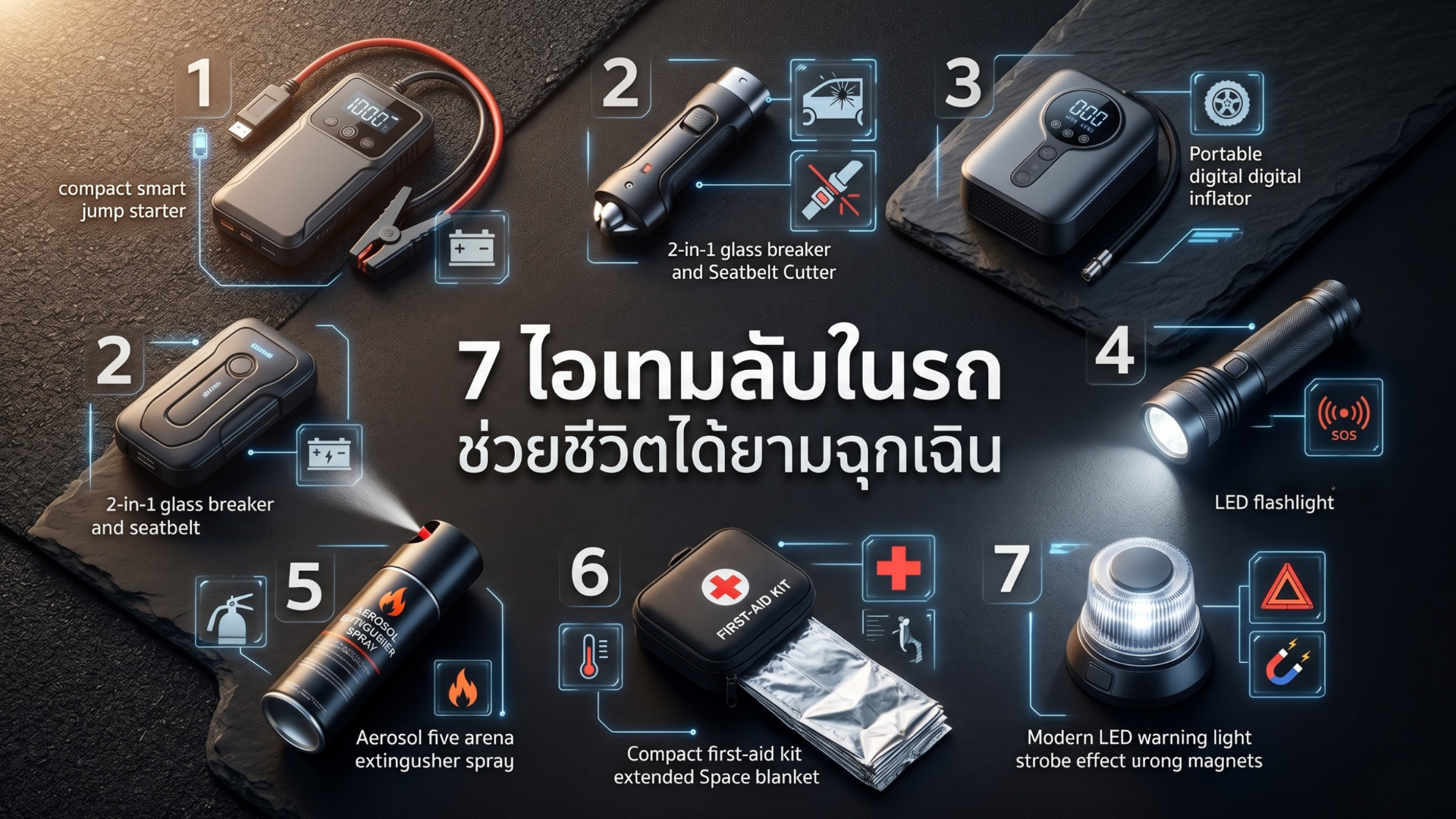
7 Secret items in your car to keep for life-saving emergencies
Even in a world in 2026 filled with Electric Vehicles (EVs) and smart autonomous driving systems, "unexpected events" on the road remain 100% unavoidable. Often, safety does not depend on the vehicle's software but on the "emergency equipment" you have prepared for when technology might fail you.
As an automotive safety expert, here are 7 secret items that should be kept in your car. These have been selected for their maximum efficiency in saving lives and solving immediate problems.
- Portable jump starter: Start your car yourself without needing jumper cables or another vehicle.
- Window breaker and seatbelt cutter: The only survival tool if you are trapped inside the car after an accident.
- Wireless digital air compressor: Handle tire leaks anywhere without needing to change a spare tire on the road.
- High-power LED flashlight (Magnetic): Provides illumination and SOS signals with a magnetic base for car repairs.
- Portable fire extinguisher spray: Suppress initial fires from electrical systems or the engine.
- First aid kit and emergency blanket: Maintain body temperature and provide basic first aid.
- Flashing LED warning signal: Prevent secondary accidents with light visible from over 500 meters away.
Deep dive into the 7 secret items with 2026 specifications
1. Smart jump starter
In 2026, these devices are as small as a mobile power bank but have enough voltage to start large internal combustion engines or jump-start the 12V system in an EV when the battery is too dead to even open the doors.
- Why you need it: It helps you escape a dead battery situation in remote areas without waiting for outside help, which also reduces the risk of crime.
2. 2-in-1 safety hammer and seatbelt cutter
This is a device that must be "reachable within 3 seconds." It should only be installed by the door or center console. Never keep it in the trunk.
- Why you need it: In the event of a water accident or a total electrical lock, seatbelts can become traps. The seatbelt cutter and carbide hammer head will help you exit the vehicle promptly.
3. Wireless digital air compressor
Tire leaks are the number one problem on the road. The new 2026 models run on internal batteries and can be charged via USB-C.
- Why you need it: If you have a nail leak, you can pump air back in to drive to the nearest repair shop without wasting time changing a spare tire on a dangerous roadside.
4. High-power LED flashlight with magnetic base
A flashlight with a red flashing mode (SOS) and a magnetic base that can stick to the car body allows you to work hands-free.
- Why you need it: It is many times brighter than a smartphone flash and serves to warn vehicles behind you of your position in total darkness.
5. Aqueous aerosol fire extinguisher
Modern fire extinguishers are the size of a portable water bottle but can extinguish oil and electrical fires without leaving messy residues that harm the engine.
- Why you need it: Most car fires start small. Suppressing the event within the first minute can save immense property and lives.
6. First aid kit and emergency blanket (Space blanket)
What beginners often overlook is the "foil blanket," which is lightweight and folds as small as a palm.
- Why you need it: This blanket reflects up to 90% of body heat. it is essential if the body goes into shock from injury or if you have to wait for help in cold weather.
7. Flashing LED warning signal
Instead of using old-fashioned triangle signs which are hard to see on heavy rainy nights, an LED warning light attached to the roof or placed on the ground sends a clearer signal.
- Why you need it: It prevents secondary accidents where a following car crashes into a stalled vehicle, which is a leading cause of death on highways.
Tips
Having all the equipment means nothing if it "deteriorates" when you actually need it. As an expert, I emphasize 3 main factors:
- Heat resistance: Inside a car parked in the Thai sun, temperatures can reach 65°C. Therefore, items containing lithium batteries (jump starters, air pumps) must meet international safety standards such as UL, CE, or RoHS to prevent swelling or explosion.
- Usability: Emergency equipment should not have complex buttons. You must be able to use it immediately in a state of panic or low light.
- Material freshness: Wire casing or fire extinguishing liquid has an expiration date. There should be a checklist every 6 months along with your regular car maintenance.
Conclusion
Preparing these 7 secret items is not about wishing for an accident, but about professional preparation to reduce potential losses. These items are the most worthwhile investment because "safety" is priceless.
Frequently asked questions (FAQ)
1. Where is the best place to put the window breaker?
- It should be placed where the driver and passengers can reach it immediately within 3 seconds, such as the center console or door pockets. Do not keep it in the trunk or a locked glove box.
2. How often should I check the portable jump starter?
- It is recommended to check the battery level every 3–6 months, even if not used, to ensure the device has enough charge to start the car on an emergency day.
3. Will a portable fire extinguisher spray explode if kept in a car parked in the sun?
: If the product meets international standards (such as CE or RoHS), it is designed to withstand high heat. However, for maximum safety, it should be kept out of direct sunlight, such as under a seat or in a well-ventilated compartment.
Want a car valuation? Contact us to get a free car valuation within 24 hours…